
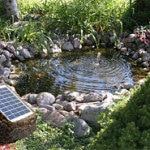
Solar gardens use the sun’s energy to power pumps, fountains and ornamental lights throughout the year. We all like to see our gardens full of plants and flowers during the day, but also illuminated at night aswell. A solar powered garden uses solar photovoltaic panels to turn the suns energy into electricity and then uses this energy to power elements of their garden, whether its lighting, fountains or the occasional garden gnome. Using the free solar energy in the garden a great way of going green thereby helping to save the planet, and is a safer, easier and cheaper way than installing mains powered electrical equipment around your garden
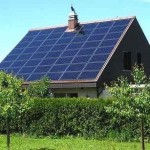
Solar panels produce electrical energy using photovoltaic cells.These photovoltaic or PV cells are made of semiconductor silicon based materials similar to those found in modern day computer chips. When the suns rays hit these silicon cells, it knocks electrons loose from their atoms to generate electricity as they flow through the cell. By improving the way in which the suns rays are absorbed by a PV cell using tracking, collectors or new materials solar panels are able to collect solar power more effectively improving a systems performance.
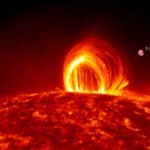
Solar radiation from the sun is the major component of a photovoltaic panel in the generation of electricity. The sun emits huge amounts of energy in the form of electromagnetic radiation which travels from the sun’s core to the Earth’s surface throughout the day. The amount of solar radiation which reaches the Earth’s surface varies daily due to atmospheric conditions of dust particles, water vapour and clouds. The performance of any PV system is mainly influenced by the amount of solar radiation that arrives at the surface of the PV’s panel
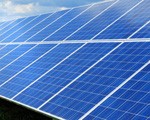
Sizing a solar system for your home or garden, whether off-grid with battery backup or grid-tied can be a daunting task. But reducing your electricity usage through conservation and efficiency measures as wellas a good home design plays an important role in keeping down the size and cost of any photovoltaic (PV) system you want to install. Using energy efficient appliances and lighting, as well as non-electric alternatives wherever possible, can make an off-grid solar photovoltaic powered system a cost competitive alternative to the utility power grid
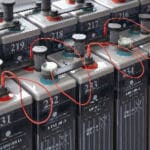
Batteries connected together in a variety of combinations can increase both storage capacity and power output compared to a single battery. When two or more batteries are connected together the resulting battery pack will have either a different voltage or a different amperage depending upon the confguration. In series connected batteries, the individual battery voltages add together to determine the battery pack voltage, while parallel connected batteries produce a battery pack capacity which is the sum of the capacities of the individual batteries
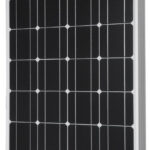
Connecting solar panels together is a simple and effective way of increasing your solar power capabilities. Solar panels can be wired in a series or parallel combination to produce more output voltage or to produce more current. Connecting solar panels together to form bigger arrays is not that complicated but it is important to note that to get the best from your solar array it is preferred that panels of the same nominal voltage and wattage are connected together
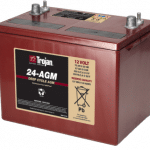
Deep cycle batteries are a must for any off-grid stand-alone renewable energy system if the lights are to be kept on during the night. Lead-acid batteries have been used in many different applications and uses ever since they were invented. Batteries store and convert chemical energy into electrical energy by means of an electrochemical reaction and the amount of electrical energy that a battery can supply is expressed in Ampere-hour units. Deep cycle batteries are used in renewable energy applications as the battery cells are charged and discharged regularly throughout the day. They may not provide instant power but their depth of charge, Amp-hour ratings and lifespan is greater
Solar array sizing is one of the first questions asked by home owners as they decide on how many solar photovoltaic panels they need. Bigger is not always better as to some extent it is based on your electricity consumption and other constraints such as budget, suitable roof space and planning approvals. While large residential solar systems may seem cheaper than small ones per cost of panel or payback period, energy efficiency changes to your home, such as insulation, LED lighting, and efficient appliancies may pay off even quicker than solar
Solar power systems can take on many forms, from stand-alone panels to charge a battery, to off-grid PV systems to power a home, to grid-connected systems providing an income when the sun shines. Before installing a solar power system, it is crucial to understand the key components that go into making up a solar power system to ensure the money you invest is well spent. The main component of any solar power system is the photovoltaic panels which convert sunlight directly into electricity. The size number, type and efficiency are key factors when choosing a system. Charge controllers, inverters, storage batteries, and cabling all add to the cost

Solar power inverters convert the continuous DC current generated by solar panels, dynamos and generators into an AC supply using electronic switching techniques. Solar power inverters are used in small single-phase residential photovoltaic (PV) systems up to large scale three-phase applications. Grid connected solar power inverters synchronise the electricity they produce with the local utility grids AC electricity, allowing the system to feed the solar made electricity directly into the grid without the need for storage batteries
